Driveway Sealing
Broom-finished driveways get a penetrating silane or siloxane sealer that soaks in and repels salt water. Your driveway keeps its natural look and its traction.
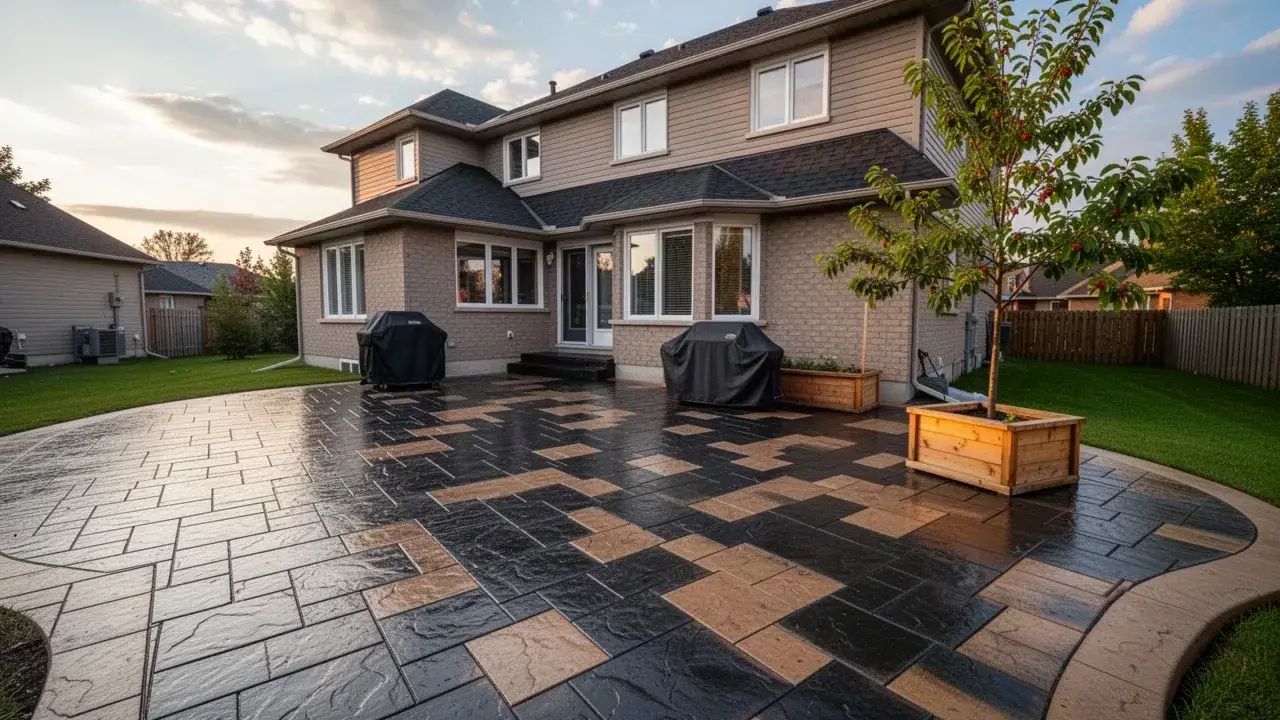
Driveway and Patio Sealing
Sila Concrete Contracting seals driveways, stamped patios, exposed aggregate, walkways and pool decks across Cambridge and Waterloo Region. A sealer is the cheapest protection concrete can get against road salt, meltwater, oil stains and UV fading.
The right sealer depends on the surface. A broom-finished driveway needs a breathable penetrating sealer that keeps chlorides out without making it slippery, while stamped and coloured concrete needs a film-forming acrylic that brings back colour and gloss.
We have sealed and resealed concrete for 12+ years across more than 600 jobs, and our licensed, insured and WSIB covered crews choose products by chemistry rather than by what is on sale at the hardware store.
We seal new concrete once it has cured and reseal older surfaces on a regular cycle. Each service below uses a different product and method.
Broom-finished driveways get a penetrating silane or siloxane sealer that soaks in and repels salt water. Your driveway keeps its natural look and its traction.
We clean, strip where needed and reseal stamped concrete and coloured and stained concrete to bring back depth and gloss.
A sealer locks stones in place and gives exposed aggregate concrete its wet-look colour. We apply thin coats so the stones do not turn cloudy.
Open joints let water reach the base and freeze. We seal them with flexible polyurethane as part of the job, and handle full joint replacement through our concrete expansion joints service.
Pool decks need a breathable, chlorine-tolerant sealer with grit for bare feet. We seal after the deck dries out and before the pool opens for the season.
Entrances, sidewalks and plazas get penetrating sealers that cut salt damage without creating a slip hazard, scheduled through our commercial concrete program.
Penetrating sealers react inside the concrete and leave no visible film, while film-forming sealers sit on top as a thin protective coat. Each has a place, and choosing the wrong one is the root of most sealing complaints we see.
| Sealer type | Look | Salt protection | Slip | Typical recoat |
|---|---|---|---|---|
| Silane or siloxane penetrating | Invisible, natural | Excellent, repels chloride-laden water | Unchanged | 3 to 7 years |
| Solvent-based acrylic | Wet look, gloss | Good while intact | Slippery when wet unless grit added | 2 to 3 years |
| Water-based acrylic | Low to satin sheen | Moderate | Less slippery than solvent | 1 to 3 years |
| Polyurethane | High gloss, hard film | Good, resists abrasion and chemicals | Slippery without grit | 3 to 5 years |
| Lithium silicate densifier | Invisible, hardens surface | Low on its own | Unchanged | Usually one time, for interior floors |
Typical penetrating products include Prosoco Consolideck SLX and Euclid Baracade Silane, and our acrylic work uses solvent-based sealers in the 25 to 30% solids range. Lithium densifiers suit interior floors, not driveways, because they harden concrete but do little to keep salt water out.
Match the sealer to the finish and how the surface is used. These are the pairings we recommend in Waterloo Region.
Use a penetrating silane or siloxane. It keeps salt water out of the pores without a film that tires can peel or that turns slick under freezing rain.
Use a solvent-based acrylic with an anti-slip grit additive. It restores colour depth and protects release-agent antiquing, but it needs recoating every few years.
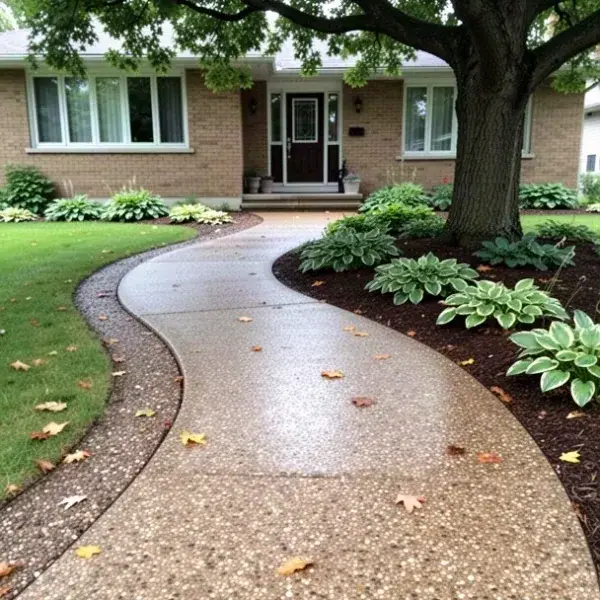
Use a breathable acrylic or a penetrating sealer, depending on whether you want a wet look. Thin coats prevent white clouding over the stone.
Use a breathable water-based or penetrating sealer with grit. A heavy solvent film on a pool deck traps moisture and peels in a single season.
We check what sealer is already on the surface with a water drop test and a solvent rub. Repairs and joint issues are noted before cleaning starts.
We pressure wash with a surface cleaner, degrease oil spots and treat efflorescence with a mild acid cleaner where needed. Failed or cloudy acrylic is stripped with a solvent or chemical stripper.
Open joints and cracks are filled with polyurethane sealant over backer rod so water cannot get under the slab. Larger damage is passed to our repair crew first.
Concrete must be dry, with air and surface temperatures around 10°C or warmer and no rain for 24 hours. Sealing damp concrete is the leading cause of blushing and peeling.
We apply sealer with a low-pressure sprayer and back-roll to avoid puddles, then add a second thin coat at the manufacturer's recoat time. Two thin coats outperform one heavy one.
We cone or tape off the area and give you clear foot and vehicle times. Penetrating sealers reopen fastest, film-forming acrylics take longer.
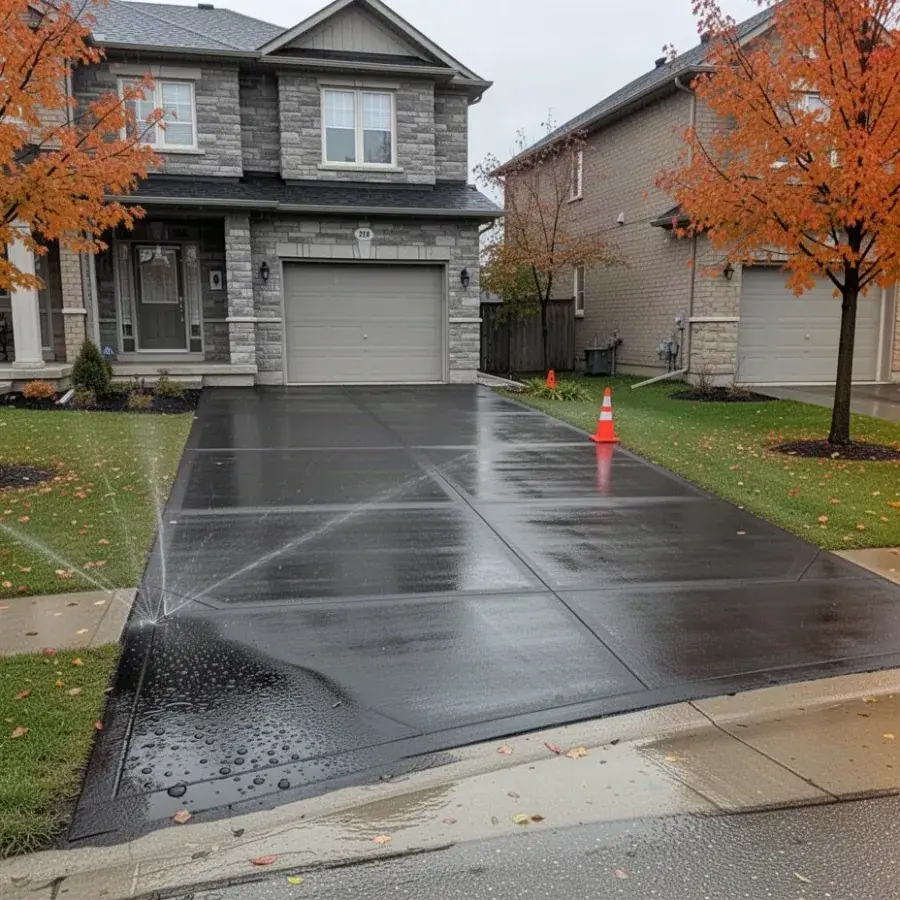
The best time to seal concrete in Cambridge is a warm, dry stretch between late May and early October. Aim for daytime highs between about 10°C and 30°C, with dry weather in the forecast.
New concrete should cure at least 28 days before a film-forming sealer goes on, so moisture can escape first. A driveway poured in late fall can still get a penetrating sealer the following spring, before it has seen many salt cycles.
For existing concrete, early fall is ideal because it sets the surface up for salt season. Sealing in the heat of a July afternoon is a mistake, because the solvent flashes off too fast and leaves bubbles and roller marks.
Sealing has real downsides when the wrong product goes on the wrong way. Every one of them is avoidable with the right choice and timing.
Slipperiness comes from glossy film sealers on walking areas, so we add a fine polymer or aluminum oxide grit to every acrylic coat on steps, decks and walkways. Blushing, a milky white haze, happens when moisture is trapped under solvent acrylic; we seal only dry concrete and can re-dissolve light blushing with a solvent such as xylene.
Peeling results from heavy coats, moisture from below or sealer applied over a dirty surface, which is why we clean thoroughly and keep coats thin. Darkening is normal with acrylics, so we show you a test patch first if colour change matters.
Book a sealing visit in late summer or early fall and your concrete goes into salt season protected.
Professional concrete sealing in Cambridge typically costs $1.25 to $4.50 per sq ft in 2026. Most two-car driveways fall between $500 and $1,200, depending on the sealer and the prep needed.
| Job | Typical 2026 range |
|---|---|
| Penetrating silane or siloxane on a broom driveway | $1.25 to $2.25 per sq ft |
| Acrylic reseal on stamped or coloured concrete | $2 to $3.50 per sq ft |
| Strip and reseal failed or cloudy acrylic | $3 to $4.50 per sq ft |
| Joint sealing during a sealing visit | $4 to $8 per linear foot |
| Typical two-car driveway | $500 to $1,200 |
Prices move with surface area, how dirty the concrete is, whether old sealer must be stripped, joint and crack work, and access around landscaping. We offer an optional reseal reminder so you hear from us when your sealer type is due, without any contract.
Sealing work carries a written workmanship warranty against peeling or blushing caused by our application; normal wear from traffic, snow removal and salt is not covered.
We seal and reseal concrete in Cambridge and the communities around it, typically booking fall sealing visits from August onward.
Driveway and stamped patio sealing from Galt to Hespeler, our busiest area.
Penetrating sealers on driveways and walkways in neighbourhoods across the city.
Stamped, coloured and exposed aggregate resealing for homes and commercial entrances.
Pool deck and patio sealing timed before opening day.
Long rural driveways and shop aprons around Baden and New Hamburg.
Resealing older stamped work and protecting new pours from salt.
Yes, in Ontario you should. Road salt and freeze-thaw cycles drive chloride-laden water into unsealed concrete, which causes scaling and rusts reinforcing steel, and a penetrating sealer slows that dramatically for a small fraction of replacement cost.
Penetrating silane or siloxane sealers typically last 3 to 7 years, and acrylics on stamped or coloured concrete need a fresh coat every 2 to 3 years. A simple test is to splash water on the surface; if it soaks in and darkens the concrete, it is time.
With penetrating sealers you can usually walk on the surface after 4 to 6 hours and drive on it after 24 hours. Film-forming acrylics need about 24 hours for foot traffic and 48 to 72 hours for vehicles, longer in cool weather.
Unsealed concrete absorbs salt water, which freezes, expands and pops the surface off in flakes, a failure called scaling. It also stains more easily and, on coloured or stamped work, fades much faster.
For plain driveways and walks, a high-solids silane or siloxane penetrating sealer is the best choice. For decorative concrete, a solvent-based acrylic with anti-slip grit gives the best balance of colour and protection.
Tell us the surface, roughly how big it is and when it was last sealed. If we see cracks or spalls during the visit, we will flag them for concrete repair before any sealer goes on.