Shell Excavation
Machine excavation to the engineered profile, with over-dig for the gravel bed, under-floor drainage and the steel.
Custom Inground Pools
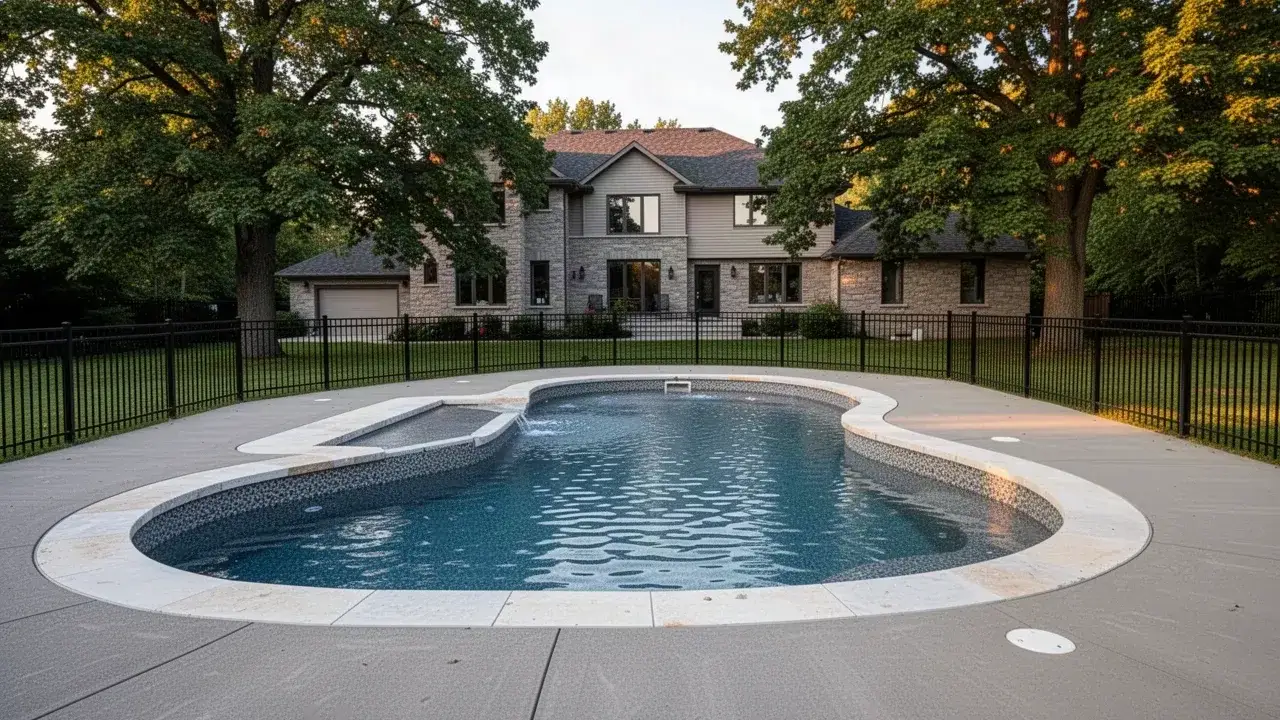
Sila Concrete Contracting builds custom concrete pools for Cambridge and Waterloo Region families who want a shape, depth or feature that a vinyl kit or a factory fibreglass shell cannot offer. Freeform lagoons, geometric lap pools, deep diving ends, wide tanning ledges and raised spa spillovers all start the same way: steel and concrete placed to fit your yard.
Our team brings 12+ years of structural and flatwork experience and 600+ completed projects to the shell, bond beam, coping and deck. We are licensed, insured and WSIB covered, and we coordinate licensed partner trades for pool plumbing, electrical and gas.
Because a concrete pool is a structure that must stay watertight through decades of Ontario frost and groundwater pressure, we treat it like one: engineered reinforcement, properly placed shotcrete and a curing schedule we do not rush.
We build the concrete structure of your pool from the dig to the deck. Specialized work such as pool plumbing, electrical bonding and gas heaters is completed by licensed partner trades on the same schedule.
Machine excavation to the engineered profile, with over-dig for the gravel bed, under-floor drainage and the steel.
A tied 10M and 15M rebar cage, doubled at the bond beam and floor transitions, as covered on our rebar reinforcement page.
Pneumatically applied concrete for curved shells, or cast-in-place walls using our concrete formwork and pouring crews for straight geometric pools.
Frost-rated porcelain or glass waterline tile, and precast, natural stone or poured-in-place coping.
A matching slip-resistant surround built by our concrete pool deck team in the same contract.
Licensed plumbers, electricians and gas fitters for circulation, bonding, lighting and heaters, with ESA and TSSA requirements met.
Concrete pools cost the most and take the longest to build, but they last the longest and are the only fully custom option. Here is how the three inground pool types compare in Ontario.
| Concrete | Vinyl liner | Fibreglass | |
|---|---|---|---|
| Structure lifespan | 50+ years for the shell | 25+ years for walls; liner every 8 to 12 years | 25 to 30+ years |
| Customization | Any shape, depth or feature | Many shapes, limited depth profiles | Fixed factory moulds |
| Typical 2026 upfront cost | $95,000 to $160,000+ | $60,000 to $90,000 | $75,000 to $115,000 |
| Upkeep | Regular brushing; interior refinish every 10 to 20 years | Liner replacement; avoid sharp objects | Lowest chemical use; gelcoat can fade |
| Build time | 8 to 12 weeks | 3 to 5 weeks | 2 to 4 weeks |
Concrete makes the most sense when the yard is irregular, you want features built into the structure, or you plan to stay in the home long enough to benefit from a shell that outlives several liners.
With concrete, the pool is drawn around how you swim and relax, not chosen from a catalogue. These are the features clients ask about most.
A shallow 150 to 300 mm deep shelf for loungers and young kids, usually 2.4 m or wider.
Full-width entry steps, corner steps and underwater benches formed into the shell, so there is no drop-in ladder.
A raised hot tub that spills into the pool, built in the same pour with its own jets and heater loop.
Sport pools at an even 1.2 to 1.5 m, or a deeper end where the space and safety rules suit it.
Interior finishes. White plaster (marcite) is the most affordable and lasts about 10 to 15 years; quartz plaster adds colour and durability; pebble finishes such as Pebble Tec feel textured and often last 15 to 25 years; full tile is the premium option.
Retaining walls are often needed when a pool sits on a sloped Cambridge lot, and our concrete retaining walls team designs them alongside the shell.
From dig to swim, most concrete pools take 8 to 12 weeks once permits are in hand. Each stage needs time to be done right.
We request Ontario One Call locates, confirm the pool enclosure permit and check GRCA mapping, then plan the temporary and permanent fence lines.
The shell is dug to profile, a gravel bed is placed, and an under-floor drain is run to a sump or standpipe where groundwater is a concern.
Partner plumbers place main drains with a hydrostatic relief valve, returns and skimmer lines while we tie the rebar cage on chairs for correct cover.
Shotcrete is shot in one continuous day where possible, building walls about 200 mm thick and avoiding cold joints that could leak.
The shell is wet down several times a day for at least 7 days, then left to gain strength for several weeks before the interior goes on.
Waterline tile and coping are set on the bond beam, the electrician completes bonding, and the deck is formed and poured.
The plaster or pebble finish is applied, the pool is filled the same day, and the water is balanced and brushed daily for the first two weeks.
Book a design consultation and we will walk your yard, talk through shape and features, and outline a realistic budget.
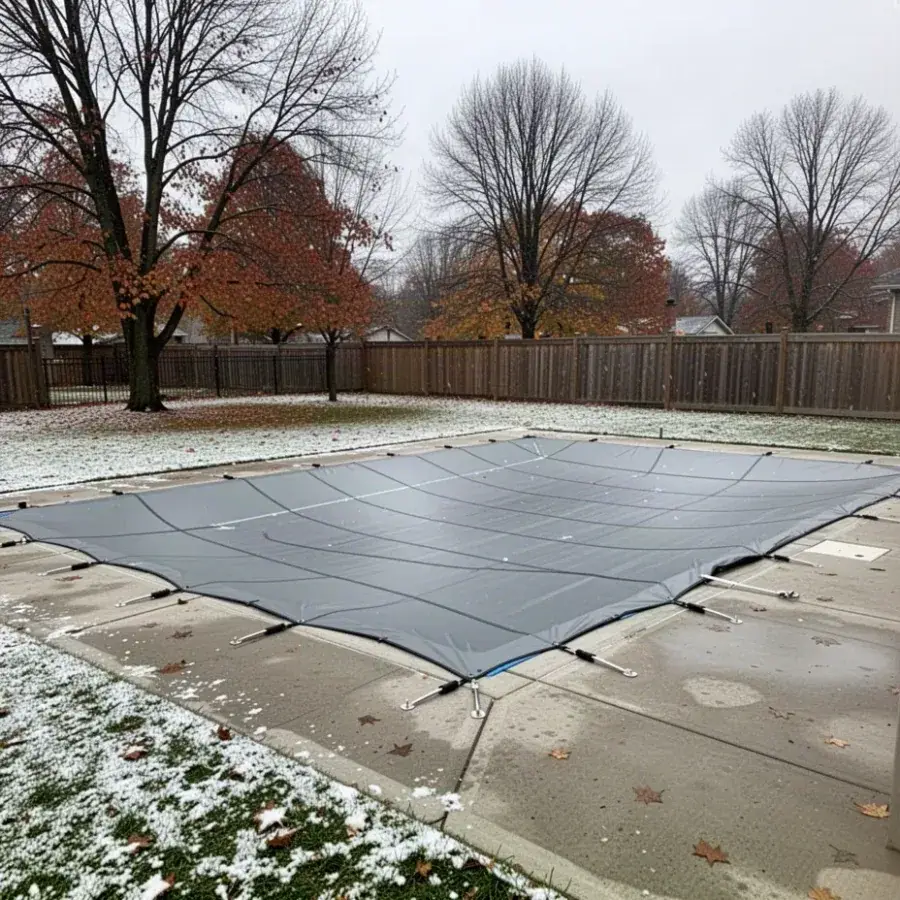
To swim by early July, excavation should start in late April or May. Fall builds work too: we can complete the shell in September or October, winterize it, and apply the interior finish in spring once temperatures stay above about 10 degrees.
A concrete pool should never be fully drained in spring or fall. Groundwater in Waterloo Region's sand and gravel soils can rise high enough to lift an empty shell, which is why the hydrostatic relief valve and under-floor drainage matter so much.
Winterizing means lowering the water just below the tile line, blowing out and plugging the lines, adding pool antifreeze, placing ice compensators in the skimmers and installing a safety cover. Kept full and closed properly, the shell itself is protected from frost heave.
Every inground pool in Waterloo Region needs a pool enclosure permit before the fence goes in, and many municipalities want to see it before excavation starts. In Cambridge, the enclosure must be at least 1.5 m high with self-closing, self-latching gates, and Kitchener, Waterloo, Guelph and Brantford each have their own pool enclosure by-laws with similar rules.
If your lot backs onto the Grand, Speed or Nith rivers or a creek, the property may be regulated by the Grand River Conservation Authority. Building in a regulated area needs a GRCA permit, and we check the GRCA's online mapping before we price the job.
A custom concrete pool in Cambridge typically costs $95,000 to $160,000 in 2026 for the pool itself, with decks, spas and landscaping on top. Construction runs 8 to 12 weeks after permits.
| Cost driver | Effect on price | Effect on timeline |
|---|---|---|
| Size and depth | More shotcrete, steel and interior finish | Adds days to excavation and finishing |
| Backyard access | Narrow access may need smaller machines or a shotcrete line pump | Slower digging and haul-out |
| Rock or high groundwater | Breaking or dewatering adds equipment and labour | Can add a week or more |
| Spa, ledges and water features | Extra forming, plumbing and heater capacity | Adds plumbing and tile time |
| Interior finish | Plaster lowest, pebble and full tile highest | Tile adds the most time |
| Deck and retaining walls | Priced per square foot or per linear metre | Usually 1 to 2 weeks |
Your consultation ends with a written scope that separates the shell, partner-trade work, interior finish and deck, plus a written workmanship warranty on our concrete work.
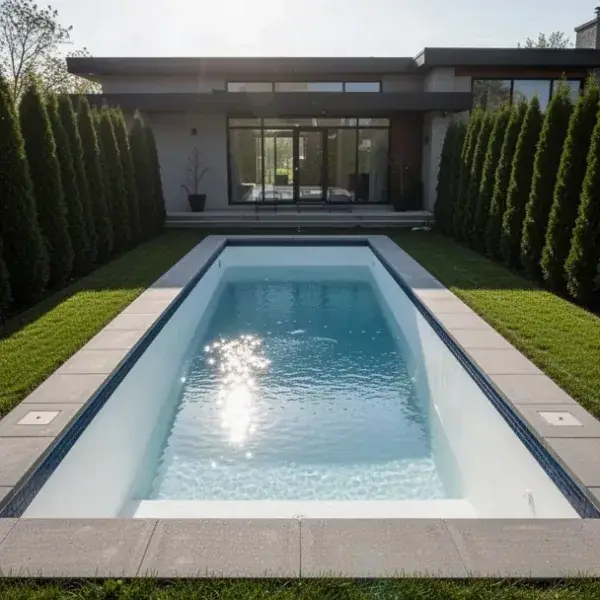
A concrete pool lasts as long as its weakest detail. The big ones are adequate concrete cover over the steel, usually at least 50 to 75 mm in soil contact, so moisture never reaches the rebar and starts rust staining or spalling.
Shotcrete must be shot, not dumped: an experienced nozzle operator builds walls from the bottom up and blows out rebound, the loose sand and cement that bounces off and gets trapped behind steel. Rebound pockets are a common cause of hollow spots and leaks in budget pools.
Finally, the bond beam at the top of the wall carries the coping and part of the deck. We thicken and double-reinforce it, and for pools with high groundwater, our concrete waterproofing products such as crystalline admixtures can be added to the mix.
Our pool projects are run from our Cambridge base, with crews travelling throughout the region. Start with our concrete contractor in Cambridge page, or see how we work as a Kitchener concrete contractor and a concrete contractor in Waterloo.
Further afield, we build for homeowners through our Guelph concrete contractor service, our concrete contractor serving Wilmot Township and our Brantford concrete contractor crews. Each town has its own enclosure by-law and soil conditions, which we cover during the consultation.
Most concrete pools take 8 to 12 weeks from excavation to the first swim. Add 2 to 6 weeks before that for design, locates and the pool enclosure permit.
A well-built concrete pool shell lasts 50 years or more. The interior finish is the part that wears: plaster lasts about 10 to 15 years, pebble 15 to 25 years and tile even longer before refinishing.
Yes, as long as it is winterized correctly and never left empty. Keeping the water just below the tile line, clearing and protecting the lines and using a proper safety cover keeps the shell, tile and plumbing safe from frost.
We build the concrete structure, coping and deck and manage the schedule. Plumbing, electrical, gas and the interior finish are completed by licensed partner trades we coordinate, so you have one point of contact.
Both are sprayed concrete. Shotcrete arrives mixed with its water from a ready-mix truck, while gunite mixes dry material with water at the nozzle; wet-mix shotcrete gives more consistent strength from batch to batch.
Tell us about your yard and the pool you have in mind. We will arrange a site visit, talk through shape, features and finishes, and follow up with a written scope that includes your concrete pool deck and any patio areas around it.