Driveway Resurfacing
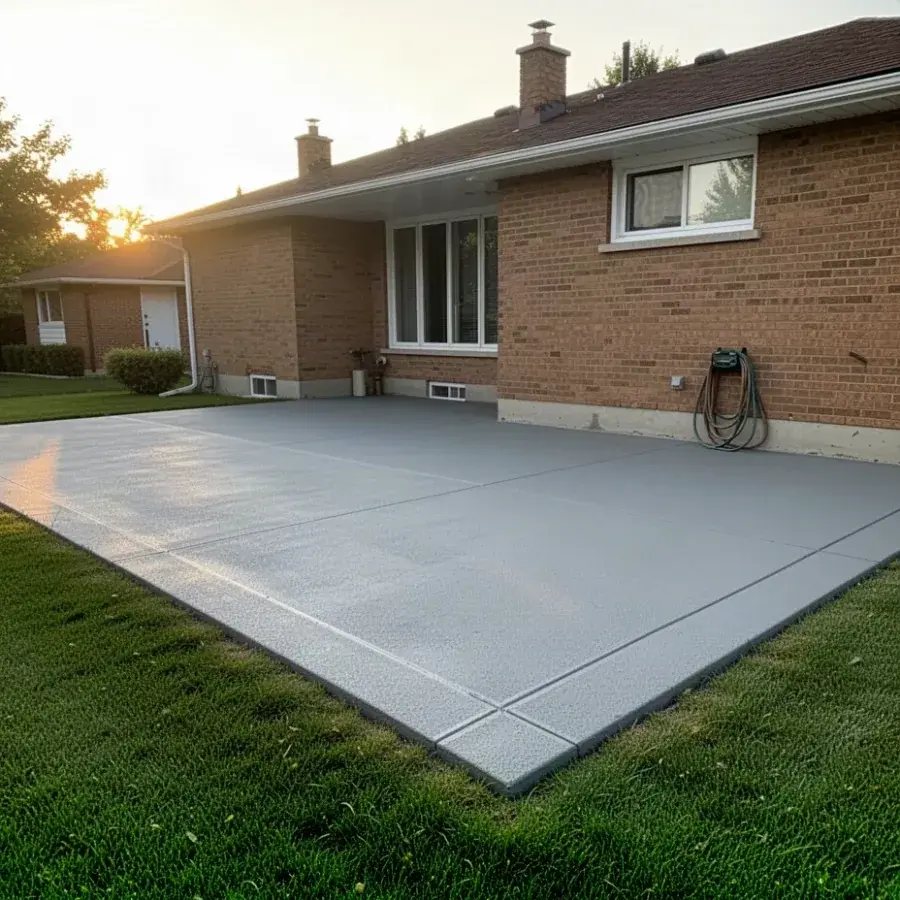
Salt scaling and pitting on driveways is the most common reason people call us. We use a vehicle-rated overlay in a broom or light texture finish, then seal it for winter.
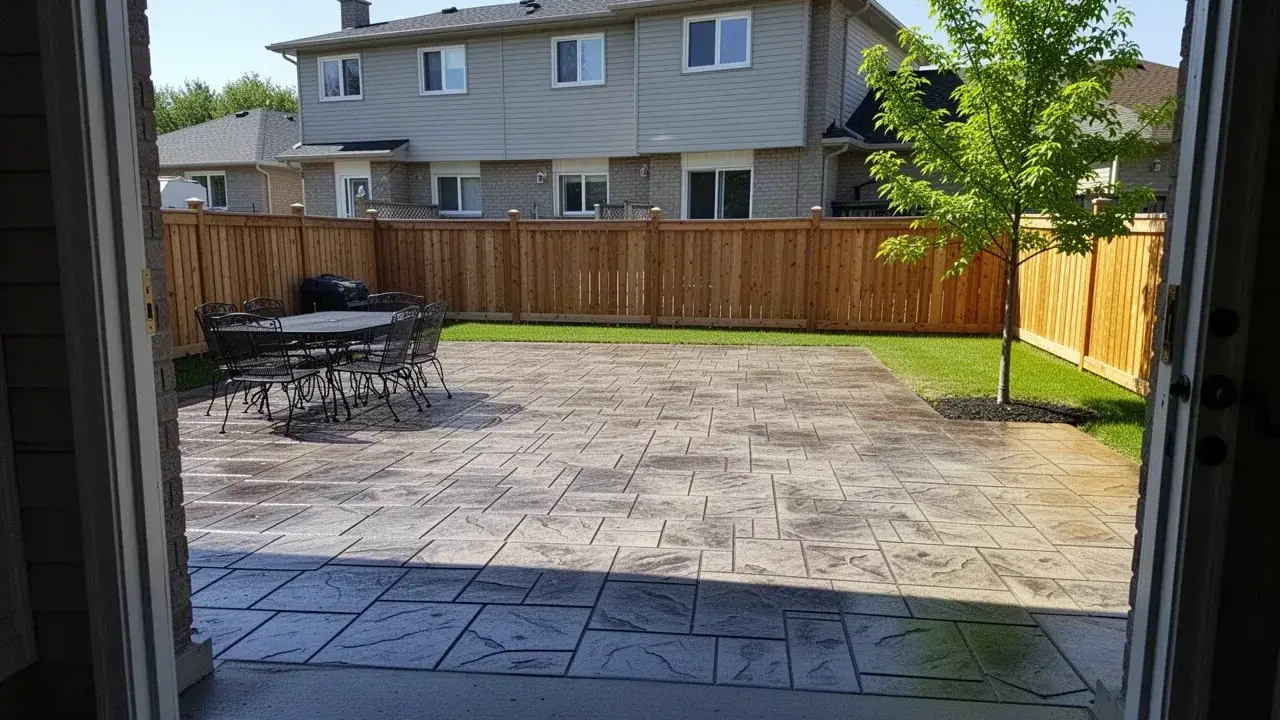
Overlays and Resurfacing
Sila Concrete Contracting gives sound but tired concrete a brand new wearing surface. We resurface driveways, patios, porches, steps, pool decks and garage floors across Cambridge and Waterloo Region with bonded, polymer-modified overlays that cost far less than tearing out and repouring.
Resurfacing suits concrete that is structurally fine but looks rough: salt-pitted, scaled, stained or patched so many times it no longer matches. A thin overlay hides all of that, and it can switch the look entirely, from plain broom finish to a stamped stone pattern or a smooth, coloured microtopping.
In 12+ years and more than 600 projects, we have seen that overlays live or die on preparation. Our licensed, insured and WSIB covered crews spend more time grinding and priming than placing, which is exactly why the surface stays bonded through Ontario winters.
Any outdoor or indoor slab with a sound structure can usually take an overlay. These are the surfaces we resurface most often.
Salt scaling and pitting on driveways is the most common reason people call us. We use a vehicle-rated overlay in a broom or light texture finish, then seal it for winter.
Plain or stained patios can be turned into a stone or wood-plank look without breaking out the slab. It is a quick way to match a renovated house or new landscaping.
Front steps take a beating from shovels and salt, and they are the first thing visitors see. We rebuild edges, then overlay treads and risers in one consistent finish.
Spray-textured overlays give concrete pool decks a cooler, grippy surface for bare feet. We tape off coping and fittings and choose a light colour that does not get too hot.
Pitted concrete garage floors can be skimmed with a self-levelling cement overlay before a coating goes on. That gives the coating a flat, sound base.
Stamped overlays, spray knockdown and microtopping let you change colour and texture completely. For a full new pour with a decorative finish, compare our stamped concrete installation.
Your concrete is a good candidate if the slab is solid and the damage is only skin deep. Run through this list before asking for a quote.
If your slab fails two or more of these, an overlay will crack or delaminate along with it. Sunken panels can be raised first with concrete lifting and slab leveling, and broken areas fixed through concrete repair before we resurface.
Every overlay we place is a polymer-modified cementitious system, meaning a cement mortar blended with acrylic or latex polymers that improve bond, flexibility and resistance to salt. We use systems from manufacturers such as Sika, Ardex and SureCrete, chosen by thickness and traffic.
| System | Thickness | Look | Durability | Best use |
|---|---|---|---|---|
| Microtopping | 1 to 3 mm | Smooth or lightly trowelled, any colour | Good under foot traffic; needs a strong sealer | Patios, porches, interior floors |
| Spray or knockdown texture | 3 to 6 mm | Textured, slightly mottled | Very good, hides minor flaws | Pool decks, walkways, patios |
| Stamped overlay | 6 to 19 mm | Slate, flagstone, brick or wood plank | Very good when sealed | Patios, porches, feature areas |
| Vehicle-rated broom overlay | 6 to 12 mm | Plain broom finish like new concrete | Good under cars if base is sound | Driveways and aprons |
| Self-levelling cement overlay | 6 to 25 mm | Flat and smooth, ready for coatings | Excellent indoors | Garages, basements, shops |
Thicker systems tolerate more substrate imperfection and traffic but take longer to cure. Thin microtoppings look sleek but depend entirely on the sealer for salt resistance, so we rarely recommend them for driveways.
An overlay is only as strong as its bond to the old slab. Most peeling overlays we are called to fix failed because they were rolled over dirty, sealed or smooth concrete.
We remove old sealers, paint and contaminants, then diamond grind or shot blast to a concrete surface profile (CSP) set by the International Concrete Repair Institute. Microtoppings need roughly CSP 2 to 3, while thicker stamped overlays want CSP 3 to 5, which feels like medium sandpaper.
Cracks are routed and filled, and active joints are honoured through the overlay so they do not telegraph as random cracks. A bonding primer goes down last, and the overlay is placed while that primer is still within its open window.
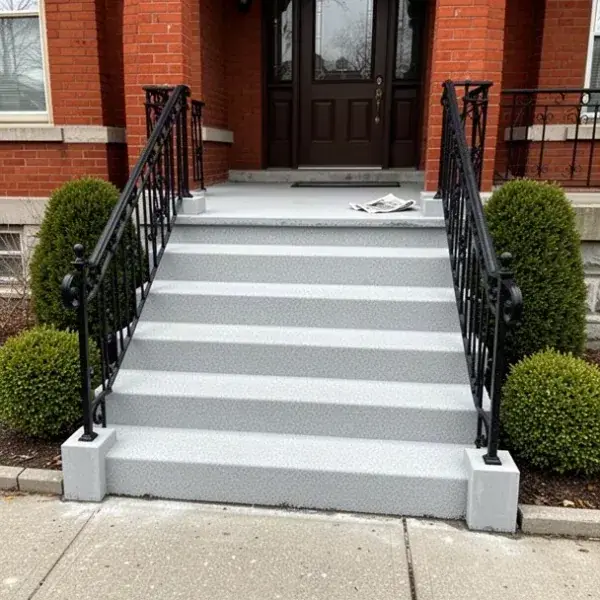
Steps need repair before they need a new surface. We rebuild chipped nosings and corners with pinned repair mortar first, because an overlay laid over a broken edge simply breaks off again.
Adding an overlay changes the height of the top and bottom risers, so we plan thickness to keep riser heights uniform. Ontario Building Code limits on riser variation exist because an odd step is a trip hazard, and we hold to them.
Treads get a slip-resistant broom or knockdown texture, and we add a fine grit to the sealer for wet and icy days. For steps that are cracked through or pulling away from the house, our concrete steps and stairs team rebuilds them instead.
Send photos of the surface and the edges and we will tell you which overlay system suits it, or whether replacement is the smarter spend.
A well-bonded overlay on a sound slab typically lasts 8 to 15 years in Waterloo Region. Thicker stamped and broom overlays sit at the long end, and thin microtoppings on high-traffic areas at the short end.
Lifespan depends mostly on the sealer. Resealing every 2 to 3 years, using calcium magnesium acetate or sand instead of rock salt in the first winter, and keeping metal shovel blades off the surface all extend it.
Overlays do not fix drainage or base problems. If water sits on the slab today, it will sit on the overlay tomorrow, so we correct slope issues before quoting a resurface.
Resurfacing in Cambridge typically costs $6 to $20 per sq ft in 2026, compared with $12 to $28 per sq ft to remove and replace. The range depends on the system, the amount of repair and the access.
| Option | Typical 2026 cost per sq ft | Expected life | Out of use |
|---|---|---|---|
| Microtopping | $6 to $10 | 8 to 12 years | 1 to 2 days |
| Spray or knockdown overlay | $7 to $12 | 10 to 15 years | 1 to 3 days |
| Stamped overlay | $12 to $20 | 10 to 15 years | 2 to 3 days |
| Replace with broom-finish concrete | $12 to $18 | 25 to 30+ years | About 7 to 10 days |
| Replace with stamped concrete | $18 to $28 | 25 to 30+ years | About 7 to 10 days |
Most residential resurfacing jobs carry a minimum charge, and step repairs, crack routing and sealer stripping add to the base rate. Each job comes with a written workmanship warranty covering bond and finish, assuming the slab underneath does not move.
We resurface driveways, patios and steps throughout Cambridge and the towns around it.
Overlays on salt-worn driveways and porches from Hespeler to Blair.
Stamped and textured overlays on patios behind older and newer homes alike.
Microtopping and spray texture for patios, porches and interior spaces.
Step and porch resurfacing on character homes and suburban entries.
Driveway and garage floor overlays for properties around Baden and New Hamburg.
Refreshing pool decks, patios and front steps across the city.
Yes, if the cracks are narrow shrinkage cracks and the slab is level. Wide, displaced or growing cracks mean the slab is moving, and an overlay will crack right along with it.
A polymer-modified overlay sealed with a quality sealer holds up well to occasional salt, better than many older non-air-entrained driveways. Heavy rock salt use still shortens its life, so we recommend sand or calcium magnesium acetate and resealing every 2 to 3 years.
Most overlays take light foot traffic in 12 to 24 hours and vehicles after 3 to 7 days, depending on the system and temperature. The sealer adds roughly a day before the surface is fully open.
Yes, but the old sealer has to come off first. We grind or chemically strip it, because an overlay will not bond to a film-forming sealer.
It is worth it when the slab is sound and the surface is the problem, often at 40 to 60% of replacement cost. It is not worth it on concrete that is sinking, heaving or broken.
Tell us what surface you want to renew and the look you are after. If we find structural damage, we will quote concrete repair first, and every overlay finishes with concrete sealing.