Joint Layout on New Pours
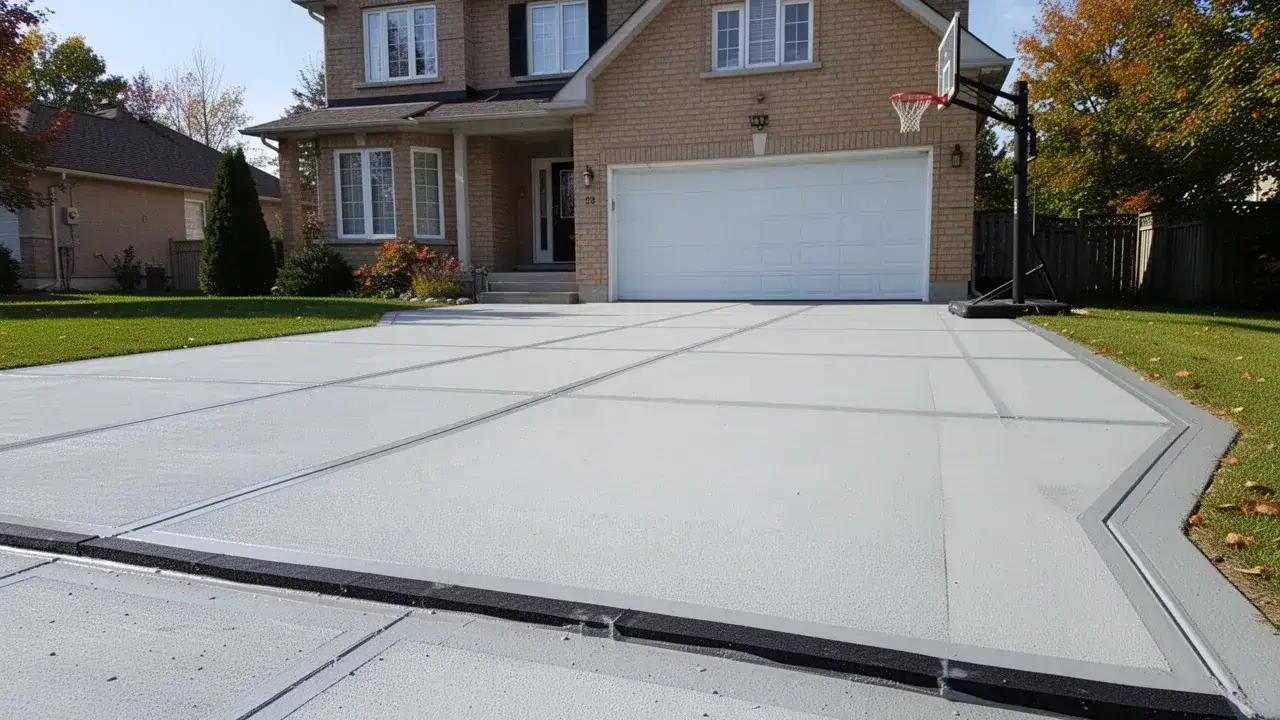
We plan every joint before the concrete truck arrives, as part of our concrete formwork and pouring work. Panel size, corners and fixtures are all mapped on the layout.
Joints and Sawcutting
Sila Concrete Contracting designs, cuts, installs and replaces concrete joints for homes and commercial properties in Cambridge and throughout Waterloo Region. Joints decide where concrete cracks and how it moves, so getting them right is the cheapest crack prevention there is.
All concrete shrinks as it cures and then grows and shrinks again with every season. Control joints give that movement a straight, planned line to crack along, while expansion and isolation joints keep slabs from pushing against foundations, columns and each other.
Over 12+ years and more than 600 projects, we have replaced countless rotted wood joints and sawcut thousands of metres of control joints. Our licensed, insured and WSIB covered crews handle new joint layout, failed-joint replacement and industrial joint filling.
We handle joints on new pours and on concrete that has been in place for decades. These are the services we provide.
We plan every joint before the concrete truck arrives, as part of our concrete formwork and pouring work. Panel size, corners and fixtures are all mapped on the layout.
Joints are sawcut to a quarter of the slab depth at the right time, with early-entry or conventional saws, so cracks form where they are supposed to.
We install premoulded filler where slabs meet foundations, steps, columns, catch basins and existing concrete, so each element can move on its own.
Old wooden divider strips in driveways and patios rot out and hold water. We cut them out and replace them with a modern sealant system.
Open joints are cleaned and sealed to stop meltwater from reaching the base and freezing. This pairs well with a full concrete sealing visit.
Warehouse and plant floors get semi-rigid joint filler that supports forklift wheels and keeps joint edges from chipping.
A control joint is a planned weak line that makes shrinkage cracks form in a straight line. An expansion joint is a full-depth gap filled with compressible material that lets slabs grow in heat, and an isolation joint is a similar full-depth gap that separates a slab from a fixed structure.
| Joint | Purpose | Where used | Material |
|---|---|---|---|
| Control (contraction) | Controls where shrinkage cracks form | Throughout slabs at regular spacing | Sawcut or tooled groove, sealed with polyurethane |
| Expansion | Lets large slabs expand without crushing edges | Long runs of sidewalk, large plazas, between pours in hot weather | Asphalt-impregnated fibreboard or closed-cell foam, sealed on top |
| Isolation | Separates slab from structures so movement does not transfer | At foundations, steps, columns, drains, posts | Full-depth fibreboard or foam, sealed on top |
| Construction | Where one day's pour stops and the next begins | Large driveways, commercial floors | Formed edge, often with smooth steel dowels |
On most residential driveways, what people call expansion joints are really control joints in the field plus isolation joints at the garage and house. True expansion joints matter more on long sidewalks and large commercial flatwork.
Random cracking is almost always a joint layout or timing problem. These are the rules we follow, consistent with CSA A23.1 practice and the wider industry guidance on slabs on grade.
Timing is the rule most often broken. Cut too early and the saw ravels the edges; cut too late and the slab has already cracked on its own, which is why our crews return the same day or use early-entry saws such as Soff-Cut within the first few hours.
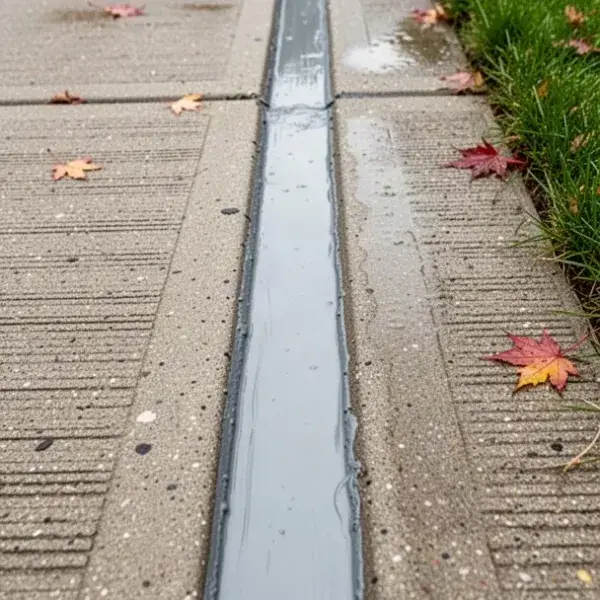
The right filler depends on what the joint has to do. Isolation and expansion joints start with full-depth asphalt-impregnated fibreboard, a compressible premoulded strip that also stops stones and debris from filling the gap.
Sealed joints use closed-cell polyethylene backer rod pushed in at a set depth, then a self-levelling polyurethane sealant such as Sikaflex Self-Leveling on flat work, or a non-sag grade on vertical faces. The backer rod controls sealant depth, roughly half the joint width, and stops the sealant bonding to the bottom so it can stretch.
Warehouse floors need something stiffer. Semi-rigid epoxy or polyurea fillers, such as MM-80 or Euclid QWIKjoint, fill the full sawcut depth and support small hard forklift wheels so the joint edges do not chip.
Failed joints let water drain straight into the base, where it freezes, heaves the slab edges and washes out fill in spring. Replacing them is a quick job that often prevents a much bigger repair.
We cut out rotted wood strips, cracked old caulk or loose filler with saws, chisels and joint plows. Wood divider strips common in driveways from the 1970s and 1980s come out completely.
Joint walls are sawcut or wire-brushed back to sound, clean concrete and blown out with compressed air. Sealant only lasts if it bonds to both faces.
Closed-cell backer rod about 25% wider than the joint is pressed in to the correct depth. Wide or deep gaps get a fill of sand or foam first.
Old, dusty or damp-prone concrete gets the sealant maker's primer to improve adhesion.
Self-levelling polyurethane is poured to sit a few millimetres below the surface so snow blades and shovels pass over it. Vertical joints are tooled into a slight concave shape.
Most polyurethane sealants skin within hours and accept foot traffic the same day, with vehicles kept off for about 24 to 48 hours.
Send photos of your driveway or floor joints and we will tell you whether they need sealing, replacing or a new layout.
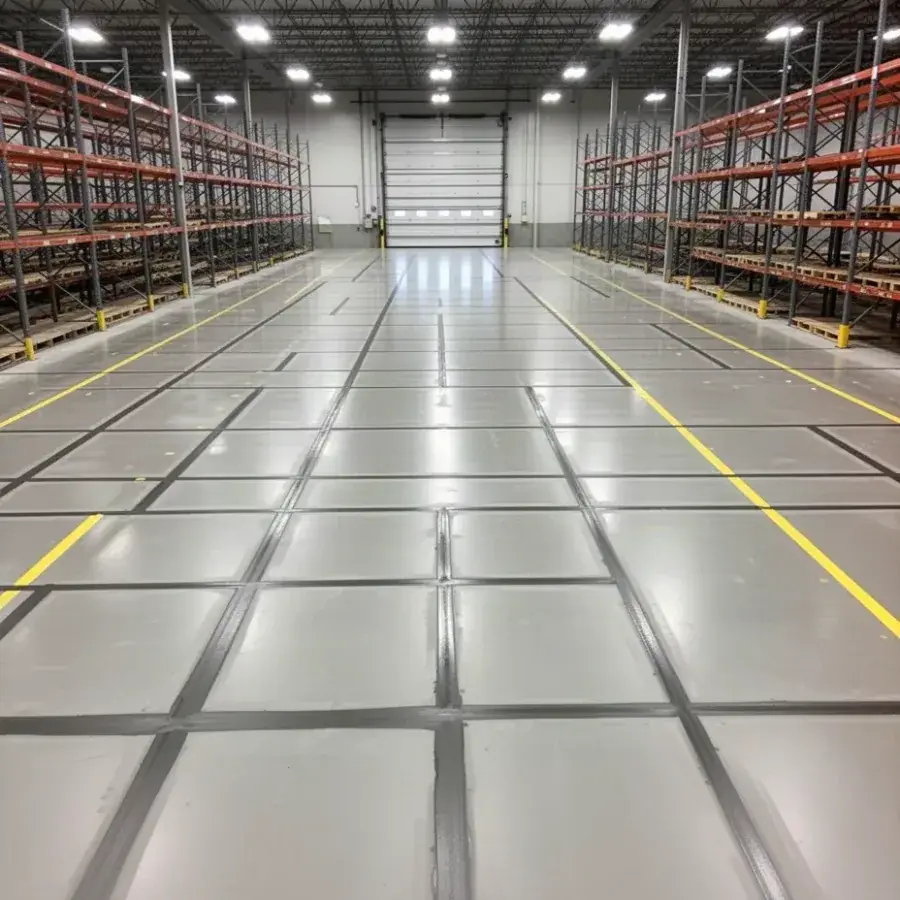
Commercial floors move more and carry far heavier loads, so their joints are engineered rather than just cut. Construction joints between pour strips use smooth steel dowels or plate dowels that transfer wheel loads while still letting the slabs shrink apart.
In high-traffic aisles and at dock doors we install armoured joints with steel edge rails that protect the concrete from hard forklift wheels. Unprotected joints in these areas spall quickly, leaving chipped edges that jolt loads and damage equipment.
Semi-rigid fillers are best installed after most slab shrinkage has occurred, usually 60 to 90 days after the pour, and topped up once the joints open further. We coordinate this timing with new concrete floor installation and commercial slabs and loading docks.
Concrete joint work is priced by the linear foot, and most residential jobs in Cambridge fall between $400 and $1,500 in 2026. Commercial joint filling is quoted by total length, joint width and the filler specified.
| Job | Typical 2026 range |
|---|---|
| Control joint sawcutting on new or existing slabs | $2 to $5 per linear foot |
| Cleaning and sealing existing joints with backer rod and polyurethane | $4 to $10 per linear foot |
| Removing rotted wood joints and resealing | $8 to $15 per linear foot |
| Semi-rigid epoxy or polyurea warehouse joint filling | $12 to $30 per linear foot |
| Minimum service call | $350 to $500 |
Price is driven by total linear metres, joint width and depth, the sealant or filler type, how much old material must be removed and whether the work happens around tenants or traffic. Joint work carries a written workmanship warranty covering adhesion and installation of the sealant we place.
We cut, seal and replace concrete joints across Cambridge and nearby communities, for homeowners and commercial clients alike.
Rotted wood joint replacement on older driveways and patios throughout the city.
Driveway and sidewalk joint sealing plus sawcutting on new residential pours.
Warehouse joint filling and commercial sidewalk joints in industrial areas.
Industrial floor joints and residential driveway joint repairs.
Shop floors, barn slabs and long rural driveways around New Hamburg and Baden.
Sidewalk, plaza and plant floor joints for commercial owners.
A driveway needs isolation joints where it meets the garage slab, the house and the city sidewalk, plus control joints in the field. Full expansion joints between every panel are rarely needed and can actually let panels shift.
The rule of thumb is 24 to 30 times the slab thickness. That works out to about 2.4 to 3 m for a 100 mm slab and 3 to 3.75 m for a 125 mm driveway, with panels kept close to square.
Yes. Sealed joints keep meltwater and salt out of the base, which prevents frost heave at the edges and washout under the slab.
Usually the joint was cut too late or too shallow, so the slab cracked on its own nearby. A crack that close to a joint can be routed and sealed to match.
Backer rod and self-levelling polyurethane sealant. It flexes with the slab, does not rot and can be topped up years later without cutting anything out.
Tell us what kind of joints you have and what is going wrong. If the slab around them is damaged, we can include concrete repair in the same visit.